16 Oct 2026
How Event-Based Challenges Alter Standard Play Patterns in Progressive Jackpot Networks

Progressive jackpot networks link slot machines and digital games across separate locations so that contributions from each player feed a shared prize pool that grows until one participant triggers the win. Standard play patterns in these systems typically feature gradual bet sizing adjustments as the jackpot meter rises, with many participants increasing wager amounts only after the total exceeds certain thresholds documented in operator reports.
Event-based challenges layer temporary rules onto these networks, such as leaderboards that award bonus entries for reaching specific contribution milestones within fixed windows or community goals that unlock multiplier effects once aggregate play hits preset targets. These additions create measurable shifts because participants adjust session timing, bet frequency, and game selection to align with the active event parameters rather than following the slower accumulation rhythm that defines non-event periods.
Core Mechanics of Progressive Networks
Operators connect games through centralized servers that track every coin-in across participating sites, and this architecture produces the steady meter growth that regular players monitor through public displays or mobile apps. Data from multiple jurisdictions shows that average session length remains consistent outside events because participants spread activity across days or weeks while waiting for the pool to reach levels that justify larger individual bets.
Network operators publish aggregate contribution figures that reveal predictable daily and weekly cycles, with peaks occurring during evening hours in major time zones. Those patterns hold steady until an event overlay activates and forces redistribution of play volume toward the challenge window.
Types of Event-Based Challenges Deployed
Time-limited leaderboards rank players by total amount contributed to the progressive pool during the event period, and higher ranks receive additional prize shares drawn from a separate fund. Community challenge formats require collective contributions to reach escalating tiers before any participant can access enhanced payout percentages on the main jackpot. Some networks run hybrid versions that combine individual tracking with shared milestones, and operators activate these formats at regular intervals throughout the calendar year.
October 2026 saw several major networks launch synchronized challenge periods that coincided with seasonal tourism increases in key markets, producing participation spikes visible in real-time meter acceleration data shared by participating operators.
Documented Shifts in Player Behavior
Players participating in event windows demonstrate higher average bets per spin during the active period compared with baseline measurements taken in the preceding month. Session frequency also rises because many individuals log multiple shorter sessions timed to leaderboard updates rather than maintaining single extended sessions. Game selection broadens as participants move between titles connected to the same network to maximize contribution efficiency under the event scoring rules.
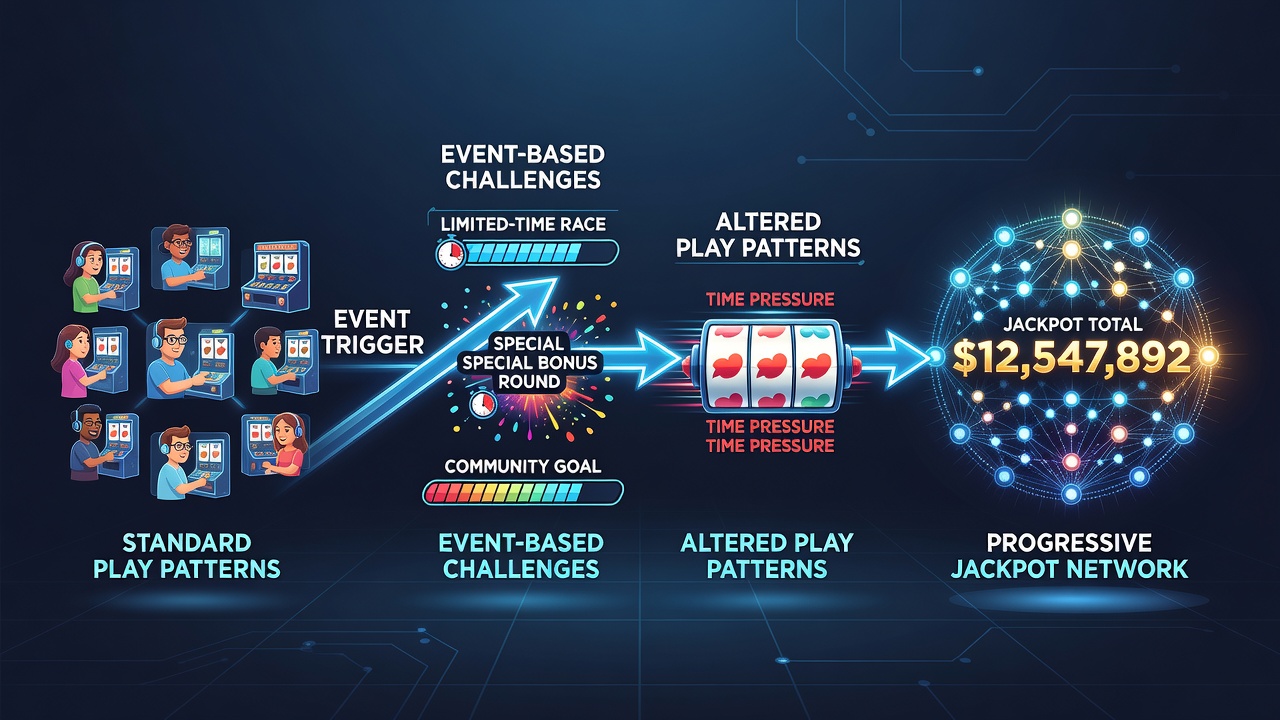
Research compiled by the Nevada Gaming Control Board indicates that contribution rates per machine increase between 18 and 27 percent during active challenge periods, while non-event intervals show stable but lower daily totals. Similar patterns appear in reports from the Australian Gambling Research Centre, where analysts tracked network-wide activity across linked venues and confirmed that event structures compress play into narrower time bands.
Impact on Jackpot Accumulation and Trigger Rates
Because event rules often reward volume over patience, the progressive meter climbs faster during challenge windows, yet the distribution of smaller side prizes tied to leaderboard positions reduces pressure on the main jackpot trigger. This produces a temporary elevation in overall payout frequency without necessarily advancing the date of the next major jackpot win. Network logs from multiple operators confirm that the time between major triggers remains statistically consistent year-over-year even as event calendars expand.
Observers note that the increased velocity of contributions during events also accelerates the reset value of the jackpot after a win occurs, returning the meter to its starting point more rapidly than in non-event conditions. This reset dynamic influences subsequent play patterns because participants who missed the previous challenge window adjust expectations for the next cycle.
Conclusion
Event-based challenges overlay structured incentives onto progressive jackpot networks and produce measurable changes in contribution timing, bet sizing, and session distribution. Data collected across regulated markets demonstrates that these temporary formats concentrate activity within defined periods while preserving long-term trigger intervals for the primary jackpots. Operators continue to refine challenge parameters based on participation metrics, and network architectures adapt to accommodate the resulting fluctuations in play volume without altering the fundamental linkage that defines progressive systems.